New Buses
- Find by Budget
- Find by Type
- Popular Comparisons
News & Reviews

English


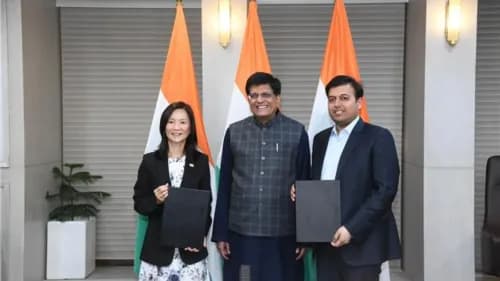
Their focus will include e-mobility, EV charging infrastructure, renewable energy, and battery energy storage systems (BESS).
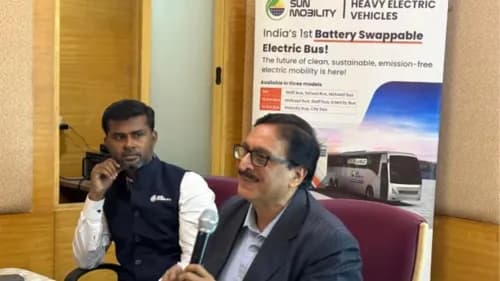
SUN Mobility operates 650+ swapping stations across India, enabling 60,000 daily swaps and covering 1.6 million kilometres.
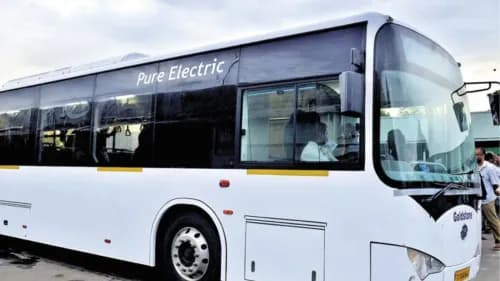
The government sources have stated that the cost per kilometer for non-AC electric buses is Rs 77.16.
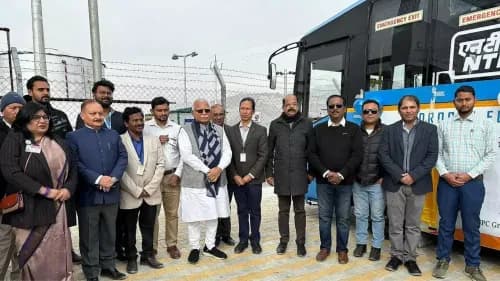
The hydrogen station has the capacity to produce 80 kilograms of green hydrogen daily.
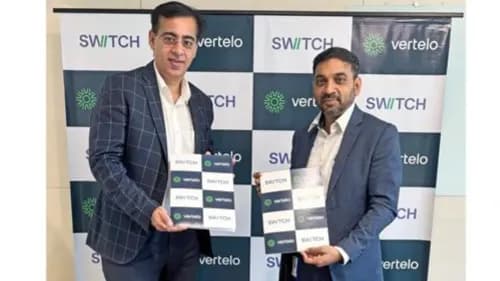
SWITCH will offer its advanced EV technology, while Vertelo will provide leasing and funding options.

The ZF's new track includes a dynamic pad with a 200-meter diameter and a surface friction of 0.9 µ.
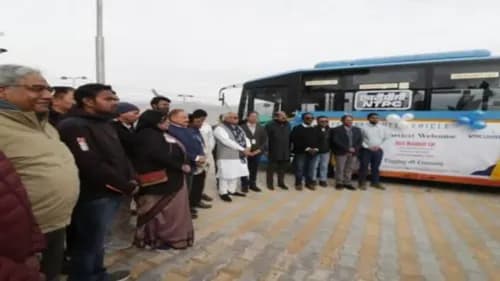
The Union Minister traveled 12 kilometres in a hydrogen bus, from the hydrogen filling station to Leh airport.

The new Route 605B will run with two air-conditioned electric buses operated by the Delhi Transport Corporation (DTC).

The buses are equipped with 65 seats, providing more capacity than the standard 52-seater buses currently in the fleet.

The company has increased its annual production capacity in Chennai to 3,000 buses to meet this demand.
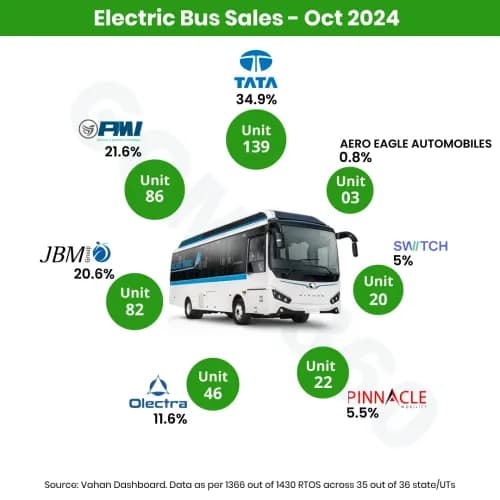
In this news, we will analyse the brand-wise sales trend of Electric buses in India in October 2024 based on the data from the Vahan Dashboard.
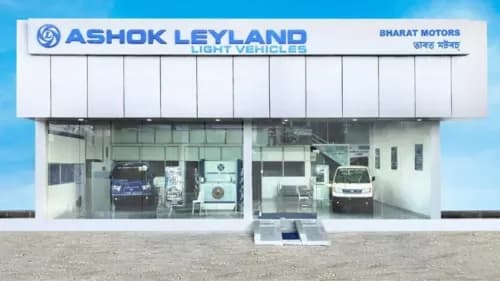
The new fleet includes Ashok Leyland's 12-meter diesel buses with stepless entry, each fitted with Allison's T 280 Torqmatic Series automatic transmission.

Payment security will cover each e-bus for up to 12 years.

Currently, eight hydrogen fuel cell buses are operational in the Delhi NCR region and Vadodara, with IndianOil’s infrastructure supporting them.
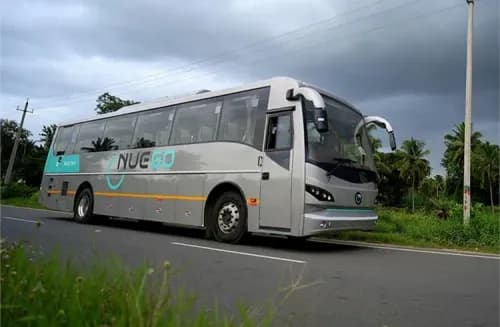
The new routes will improve connectivity in both North and South India.




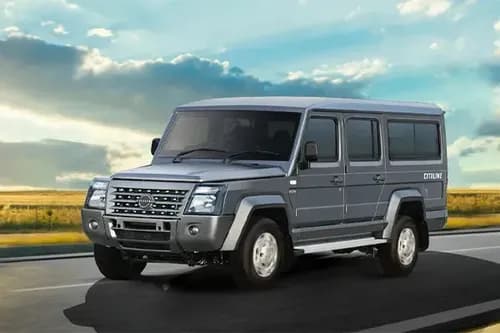
Force Citiline
₹ 15.94 Lakh *