Tractors
Trucks
- Find by Budget
- Find by Type
Buses
- Find by Budget
- Find by Type

English

Sow top mustard varieties like Pusa Mustard-24 in September-October for early harvests, high yields, and disease resistance.

By Robin Kumar Attri
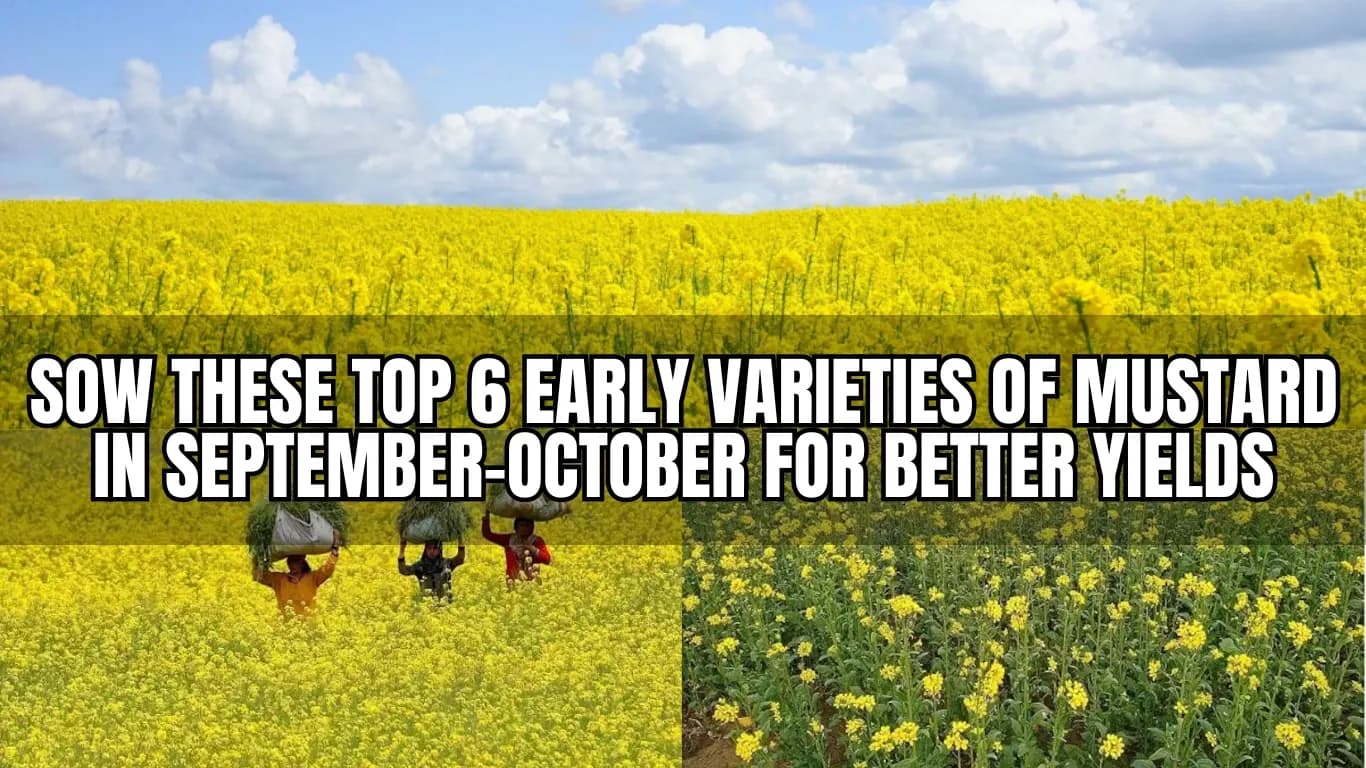
Mustard Cultivation is a key agricultural practice for farmers agriculture work in India, and sowing the right varieties at the right time can significantly boost yields. Agricultural scientists from Pusa have recently issued an advisory recommending the best early varieties of mustard for September-October sowing. These varieties, including Pusa Mustard-24, Pusa Mustard-25, Pusa Mustard-28, Pusa Agrani, Pusa Tarak, and Pusa Mahak, are ideal for short-duration cultivation, ensuring a quicker harvest and higher productivity.
Also Read: ICAR Launches 5 New High-Yield Cotton Varieties: Features and Benefits
Let’s dive into these top mustard varieties and the recommended sowing methods.
Pusa Mustard-24 is ideal for regions with timely sowing and irrigation facilities. Its long growth period results in higher yields and better oil content.
This variety offers a good balance of high yield in a short growing period, making it suitable for farmers seeking quicker results with protection against diseases.
This variety thrives in high temperatures, making it a good choice for areas like Delhi, Haryana, Punjab, and Rajasthan, where temperatures can fluctuate.
As the first early-yielding Indian mustard variety, Pusa Agrani is a great alternative to Toria and can be cultivated after paddy crops in northeastern and eastern states.
This variety is suitable for a multi-cropping system and can be grown alongside vegetables or sugarcane in January. It’s best suited for farmers practicing crop rotation.
Pusa Mahak is a good choice for farmers in rice fields across NER and eastern regions. It’s considered suitable for states like Delhi, Bihar, West Bengal, and Assam.
Also Read: ICAR Launches 7 New High-Yielding Varieties of Soybean, Groundnut, Safflower, and Sesame
To ensure the best results, farmers should follow the recommended sowing practices for mustard cultivation:
By following these guidelines, farmers can expect better yields from their mustard crops and enjoy a fruitful harvest.
Also Read: Government to Launch New Scheme for Ladli Sisters, Boosting Income Opportunities
Sowing these top mustard varieties in September-October can significantly boost your mustard yield. Each variety offers unique benefits, whether it’s early maturation, high oil content, or disease resistance. By preparing your field properly and using the right fertilizers, you can ensure a successful mustard crop this season.
Make sure to consult with local agricultural experts to choose the variety best suited for your region and climate conditions.





 Add CMV360 on Google