Tractors
Trucks
- Find by Budget
- Find by Type
Buses
- Find by Budget
- Find by Type

English
 New Delhi
India’s CV industry urges practical CAFE norms, proposing the Bharat Vector Tool for real-world emission measurement.

By Robin Kumar Attri

CV industry says lab-based CAFE norms do not reflect real truck operations.
SIAM proposes the Bharat Vector Tool for accurate, real-world emissions measurement.
The tool includes real-life driving cycles, load changes, and terrain variations.
Industry seeks exemption for LCVs and N1 category due to minimal emissions impact.
Tata Motors confirms unified industry stand on practical emission regulations.
India’s commercial vehicle (CV) sector is at a crucial turning point as manufacturers push for more practical and realistic emission rules. While companies like Tata Motors are accelerating efforts in electrification and decarbonisation, the immediate challenge lies in defining fair and accurate standards for internal combustion engine vehicles.
During Tata Motors recent financial briefing, the company highlighted a unified industry stand against laboratory-style fuel efficiency rules.
Current Corporate Average Fuel Economy (CAFE) norms are mostly based on testing methods designed for cars. These controlled, constant-speed testing conditions do not match the tough, real-world environments that trucks and buses operate in.
The CV industry believes that using the same laboratory metrics for trucks leads to unrealistic expectations and inaccurate efficiency readings.
To address this, the Society of Indian Automobile Manufacturers (SIAM) has submitted a proposal to the Bureau of Energy Efficiency and the Ministry of Road Transport & Highways.
The proposal recommends that medium and heavy-duty vehicles (MSCV/HCV) should not follow “constant speed fuel consumption norms.”
Instead, SIAM suggests adopting the Bharat Vector Tool, also known as the Vehicle Energy Consumption Tool.
This tool allows fuel usage and CO₂ emissions to be measured based on actual driving conditions, such as:
Variable terrains
Changing loads
Real-life driving cycles
Manufacturers argue that this approach is far more accurate and better aligned with India's CO₂ reduction goals. Trucks face unpredictable and demanding road conditions daily, making real-world calculations essential for meaningful emission control.
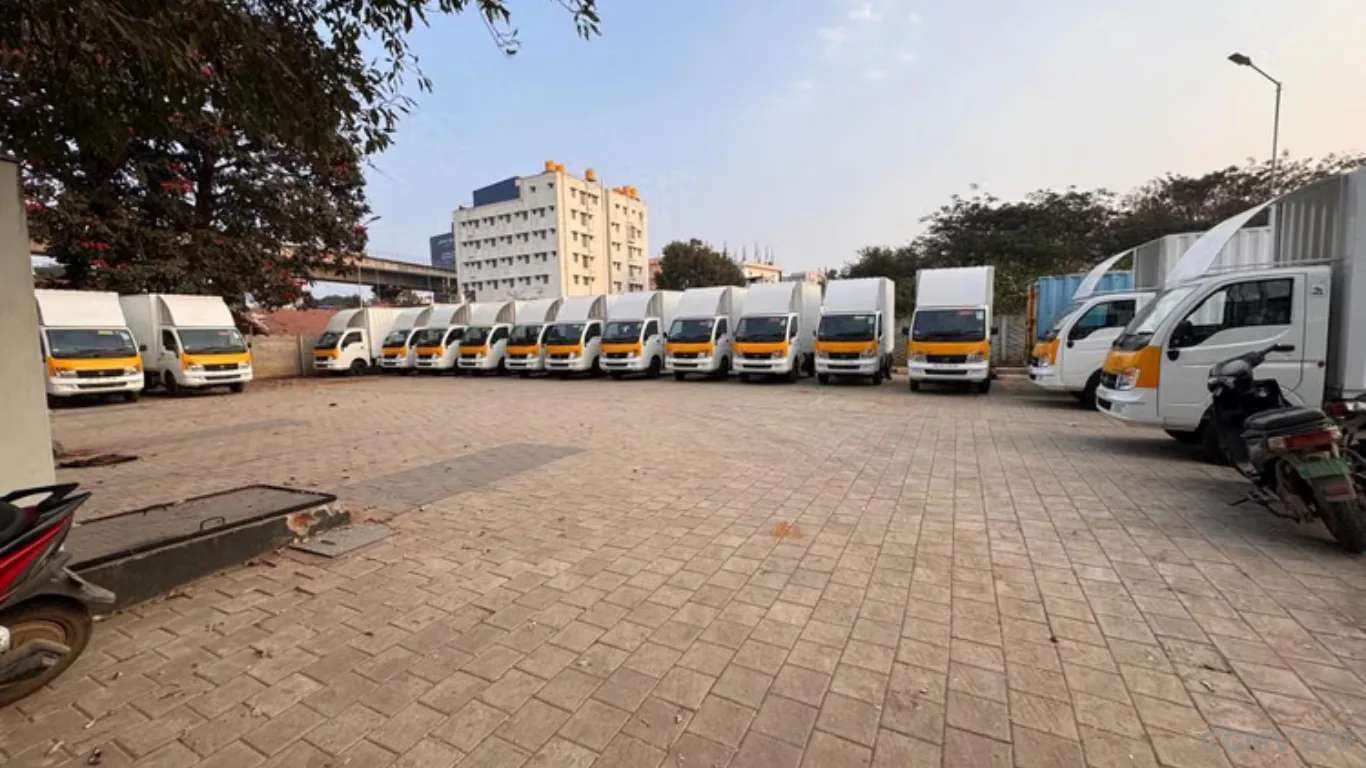
The debate shifts when looking at smaller segments like Light Commercial Vehicles (LCVs) and the N1 category. Tata Motors confirmed that the industry has jointly requested a pragmatic exemption for this category under the proposed norms.
LCVs contribute less than 2% of the total fuel consumed in the entire transport sector.
Their CO₂ emissions account for less than 1% of overall industry emissions.
Due to this minimal environmental impact, manufacturers believe that enforcing stricter fuel efficiency rules on these vehicles adds little value to national emission goals.
The industry’s request is based on fairness and practicality, ensuring regulatory focus remains on segments with the greatest environmental contribution.
Also Read: Eicher Motors Sees Steady CV Growth in H2 FY26 as GST Reform and Infra Push Boost Demand
India’s CV industry is calling for fair and practical emission rules that reflect real-world conditions. By recommending the Bharat Vector Tool and seeking exemptions for low-impact vehicle categories, manufacturers aim to support effective CO₂ reduction without imposing unrealistic standards. The sector believes that accurate measurement methods are essential for sustainable progress and balanced regulation.





 Add CMV360 on Google