Tractors
Trucks
- Find by Budget
- Find by Type
Buses
- Find by Budget
- Find by Type

English
 New Delhi
Several factors contribute to the high cost of tractors in India. In this article, we have mentioned some of the major reasons why tractors are expensive in India.

By Priya Singh
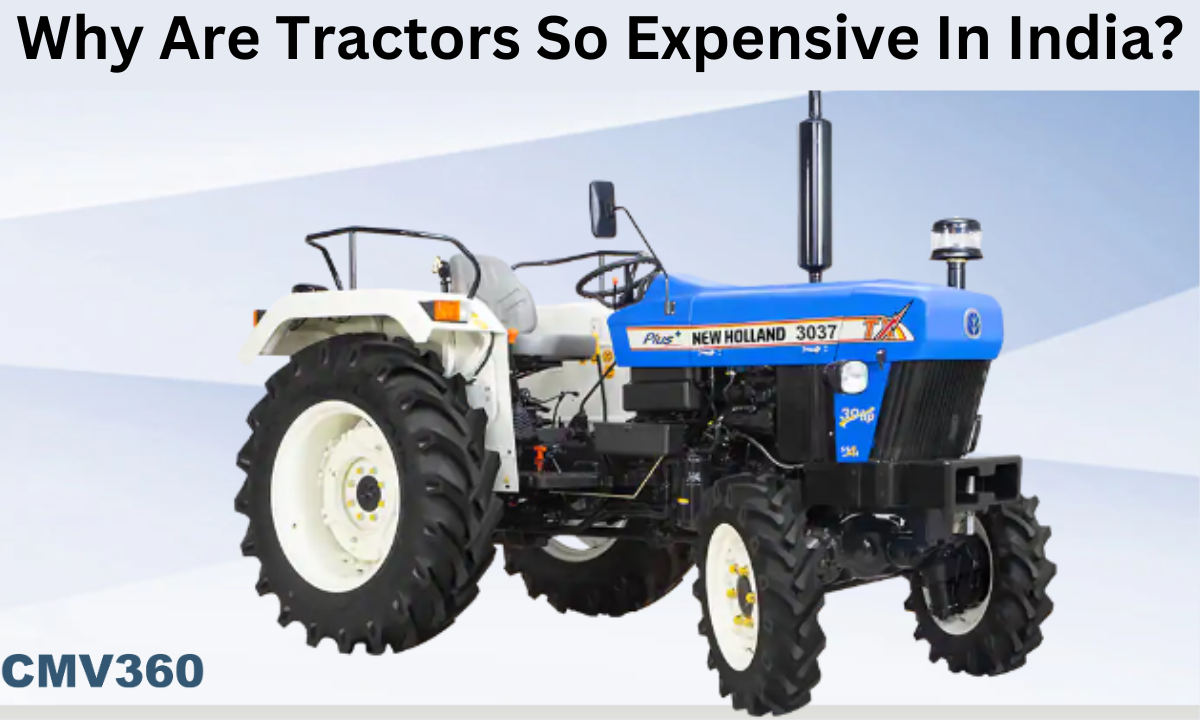
Tractors play a crucial role in Indian agriculture, boosting productivity and efficiency for farmers. Despite their importance, tractors in India are often considered expensive, creating financial hurdles, especially for small and marginal farmers.
Various factors contribute to their high cost, including manufacturing complexity, customization for diverse needs, technological advancements, import duties, limited market competition, emission standards compliance, and economic realities for small farmers.
Understanding these factors sheds light on the challenges faced by farmers and the agricultural sector in making tractors more accessible and affordable. Several factors contribute to the high cost of tractors in India.
While agricultural machinery is crucial for enhancing productivity and easing the workload of farmers, the expenses associated with tractors can be a significant barrier for many. In this article, we have mentioned some of the major reasons why tractors are expensive in India.
Here are some top reasons why tractors are expensive in India:
Imported Technology and Components
Many tractor manufacturers in India rely on imported technology and components, which can increase production costs. Importing advanced machinery and technology from other countries often involves high tariffs and taxes, contributing to the overall expense.
Also Read: Top 5 New Holland Tractors To Buy In India: Specifications, Features and Price
Manufacturing and Distribution Costs
Tractors, being complex machines, demand substantial resources for manufacturing. The costs associated with raw materials, labor, and transportation accumulate, directly impacting the overall price of the final product.
Customization for Indian Conditions
Tractors often need customization to suit the diverse and challenging agricultural conditions in India. Adapting tractors to handle various terrains, crops, and farming practices increases production costs.
Compliance with Emission Standards
Tractors need to comply with strict emission standards set by regulatory authorities. Meeting these standards requires additional investment in research, development, and the incorporation of advanced emission control technologies, which adds to the overall cost.
Government Regulations and Taxes
Government regulations, taxes, and import duties on raw materials, components, and finished products contribute significantly to the high cost of tractors. Compliance with safety and environmental standards set by the government also adds to the expenses.
R&D Investments
Tractor manufacturers invest heavily in research and development to improve the efficiency, performance, and features of their products. These investments are passed on to consumers through the pricing of the tractors.
https://www.youtube.com/watch?v=GA50lPJlf5w
Fluctuating Raw Material Costs
The prices of raw materials such as steel, iron, and rubber, which are essential for manufacturing tractors, can fluctuate. Variations in raw material costs directly impact the overall production expenses and, subsequently, the final retail price.
Distribution and Logistics
The distribution network and logistics involved in reaching tractors to remote rural areas in India can be complex and costly. Transportation, dealer margins, and other distribution-related expenses contribute to the overall price tag.
Economies of Scale
The scale of tractor production in India may not be as large as in some other countries. Higher production volumes can lead to economies of scale, reducing the cost per unit. In India, the relatively lower production volumes may result in higher costs per unit.
Technology and Features
Modern tractors boast advanced features like GPS guidance and automatic steering, enhancing productivity and efficiency. While these technologies offer tangible benefits, they also contribute to the overall cost of the tractor.
High Operating and Marketing Costs
Tractor manufacturers face considerable operating and marketing costs, which are passed on to consumers. Investments in research and development, advertising, and dealer commissions contribute to the overall price structure.
Availability of Spare Parts and Service
Regular maintenance and repairs are essential for tractors, and the associated costs can be significant. The availability of spare parts and a robust service network also influence the total cost of owning and maintaining a tractor in India.
Dealer Margins and After-Sales Services
Dealer margins and the provision of after-sales services contribute to the final cost of tractors. Manufacturers often need to provide a network of service centers and spare parts, adding to the overall cost structure.
Addressing these factors through policy initiatives, local manufacturing, and research and development efforts can potentially help reduce the cost of tractors in India and make agricultural machinery more accessible to farmers.
The expensive price of tractors in India is partly due to farmers relying on tractor loans for financing, creating additional financial burden, especially on those already facing economic challenges. This high cost serves as a significant obstacle for small and marginal farmers, limiting their ability to invest in advanced agricultural technologies and impacting productivity and profits.
To make tractors more affordable, several measures can be considered. One approach involves reducing import duties on tractors, making them more accessible and increasing market competition, potentially leading to lower overall prices.
Another solution is to offer improved subsidies and discounts on tractor purchases, helping to alleviate the financial strain on farmers. Collaboration between the government and tractor manufacturers to reduce production costs through incentives or tax breaks is another avenue for consideration.
Additionally, enhancing financial literacy among farmers and facilitating access to affordable credit can simplify the financing process for purchasing tractors and other agricultural equipment.
By implementing these strategies, the government can play a crucial role in making tractors more affordable for farmers in India, ultimately boosting their productivity and profitability in the agricultural sector.
Also Read: Popular 7 Feet Rotavators in India: Features and Price
Conclusion
In conclusion, although tractors in India may appear expensive initially, it's crucial to recognize the long-term advantages they offer in terms of enhanced productivity and efficiency for farmers. The introduction of tractors has transformed agriculture, reducing dependence on manual labor.
As the demand for tractors rises, it is anticipated that efforts will be made to address the factors contributing to their high prices, ultimately making tractors more accessible to farmers throughout India.



 Add CMV360 on Google